
Lady Windermere’s Fan (1925)
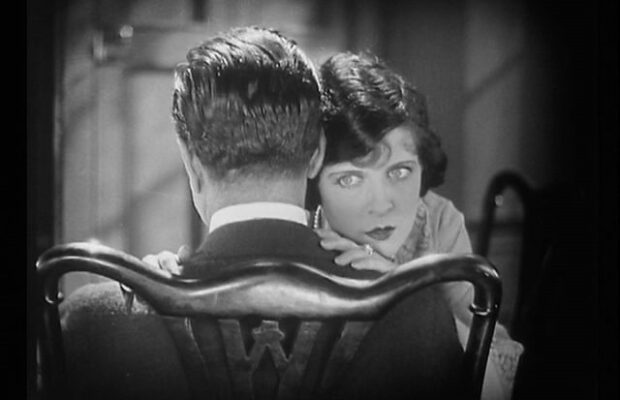
Toronto Film Society presented Lady Windermere’s Fan (1925) on Saturday, September 29, 2026 as part of the Season 79 Virtual Film Buffs Screening Series, Programme 1.
Production Company: Warner Bros. Pictures, Inc. Director: Ernst Lubitsch. Screenplay: Julien Josephson, based on the play by Oscar Wilde. Cinematography: Charles Van Enger. Release Date: December 26, 1925. Running Time: approximately 90 minutes.
Cast: Ronald Colman (Lord Darlington), Irene Rich (Mrs. Erlynne), May McAvoy (Lady Windermere), Bert Lytell (Lord Windermere), Edward Martindel (Lord Augustus), Helen Dunbar (Duchess of Berwick), Carrie Daumery (Duchess), Billie Bennett (Duchess).
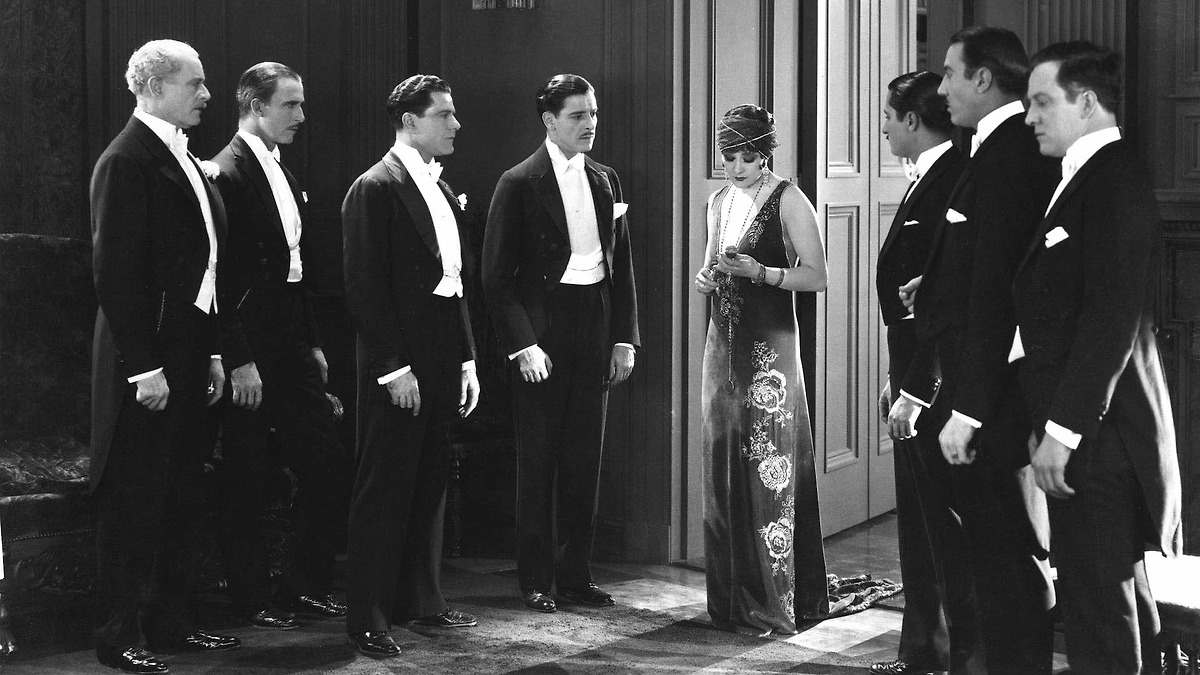
Adapted from the Oscar Wilde play of the same name, Lady Windermere’s Fan shines a scrutinizing and humorous lens on the pretence of the social elite. When the notorious Mrs. Erlynne (Irene Rich) arrives in London, she leverages her true identity as the mother of Lady Windermere (May McAvoy) to blackmail Lord Windermere (Bert Lytell) for money and an introduction into high society. Lady Windermere, believing the payments mean her husband is having an affair with Mrs. Erlynne, returns the flirtations of the bold Lord Darlington (Ronald Colman) and ends up in a precarious situation. Erlynne never does tell Lady Windermere who she is, ultimately sacrificing her own reputation to save her daughter’s dignity.
Understandably, Wilde’s play has been adapted for film and television at least ten times. What is surprising is that Ernst Lubitsch selected a story driven by verbal wit and epigrams in an era of silent productions. In what turned out to be a brilliant decision, he dropped Wilde’s dialogue altogether explaining that “Playing with words is fascinating to the writer and afterward the reader, but on the screen it is impossible. Would much charm remain to long excerpts from Wilde’s play if the audience had to ponder laboriously over the scintillating sentences on the screen?” Rather than cramming dialogue into wordy title cards, Lubitsch enriches the narrative and suggests plot points through visual aids, including windows and mirrors, and progresses the story with physical props like letters, cards, and invitations. In the opening of the film Lady Windermere’s decision to move Alford Darlington’s place card from dinner after initially seating him beside her hints at a more than friendly connection, and the director’s use of binoculars demonstrate how the scandalous Mrs. Erlynne was being examined from every angle by the hostile spectators at the racetrack.
Lubitsch is faithful to Wilde’s original story to the extent that the film retains its four-act structure, however there are many elemental changes. The original play takes place over the course of about 24 hours and was a Victorian period piece, while the film spans over several months in a contemporary setting. Mrs. Erlynne’s identity is known from the very start of the picture and, most notably, Mrs. Erlynne, not Mrs. Windermere, is the story’s protagonist. Irene Rich brings sensitivity and depth to the role, winning over audiences through her personal sacrifice to help her daughter save face as well as her bold rejection of Lord Augustus in an unforgettable final scene. Rich continued her career in supporting roles for a couple more decades. Colman, who was cast through the courtesy of Samuel Goldwyn (which Lubitsch sarcastically incorporated into his direction), was the cast member who went on to the highest acclaim, performing in many films throughout the 1930s and 1940s, and winning an Academy Award for Best Actor for A Double Life (1947).
With several acknowledged classics already under his belt, Lubitsch directed the critically acclaimed Lady Windermere’s Fan barely two years into his American career. His talking picture triumphs include the pre-code Trouble in Paradise (1932), holiday favourite The Shop Around the Corner (1940), and dark comedy To Be or Not to Be (1942). Nicola Lubitsch said of her father’s work, “He expected you to be intelligent and he expected you to get it, and that to me is the Lubitsch touch.” Applying this touch to Wilde’s work exposes the vanity and hypocrisy of the upper class and the double standards applied to women regarding societal expectations, realities unfortunately as relevant today as they were a century ago.
Film notes by Kathleen McLarty
You may also like...

-
Support Classic Cinema: Toronto Film Society Sponsorship Opportunities
Toronto Film Society Corporate Sponsorship 2026/27 About TFS Founded in 1948, the Toronto Film Society is one of Canada’s oldest film appreciation groups. It was originally formed to meet...
Virtual Saturday Night at the Movies
Toronto Film Society will be screening Alfred Hitchcock’s Lady Windermere’s Fan (1925) straight to your home on Tuesday, September 29, 2026 at 7:15 p.m. (ET)! Directed by Ernst Lubitsch,...


