
The Girl Most Likely (1957)
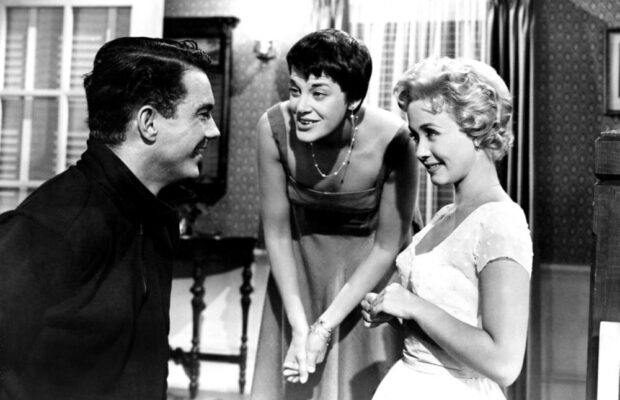
Toronto Film Society presented The Girl Most Likely (1957) on Monday, August 25, 1986 in a double bill with The Mating Season as part of the Season 39 Summer Series, Programme 7.
Production Company: R.K.O. Radio Pictures/Universal-International. Director: Mitchel Leisen. Produced by: Stanley Rubin. Photography: Robert Planck. Music: Nelson Riddle. Songs by: Ralph Blanc, Hugh Martin. Screenplay: Devery Freeman. Choreographer: Gower Champion.
Cast: Jane Powell (Dodie), Cliff Robertson (Pete), Keith Andes (Neil), Kaye Ballard (Marge), Tommy Noonan (Buzz), Kelly Brown (Sam), Judy Nugent (Pauline), Una Merkel (mom), Frank Cady (pop).
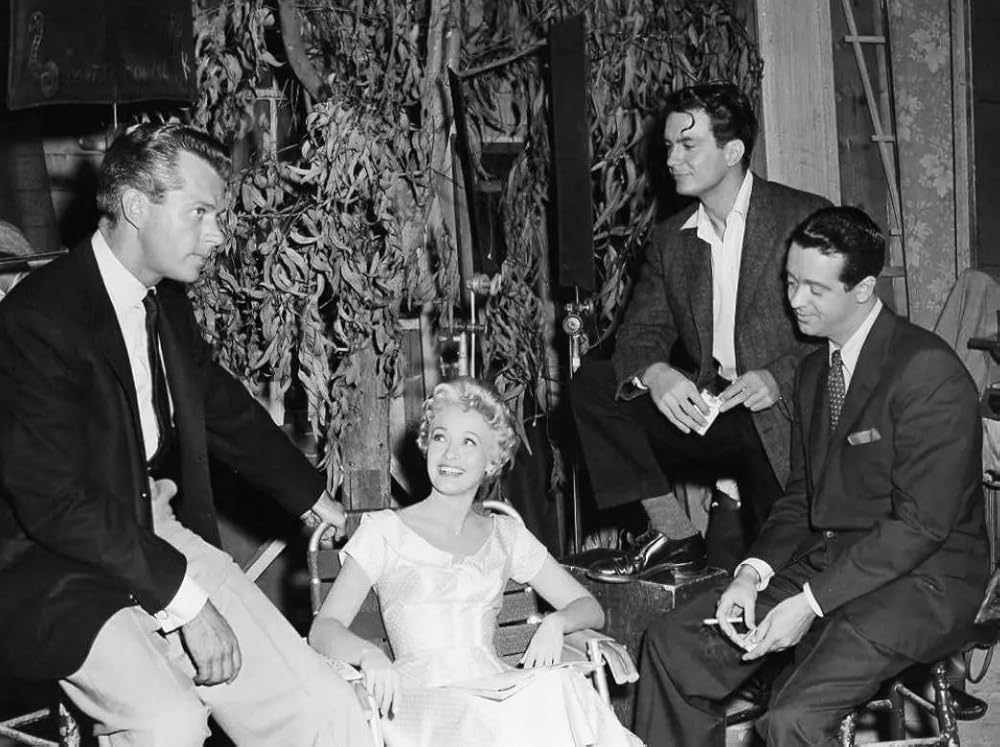
The Girl Most Likely, a musical remake of a Ginger Rogers comedy, Tom, Dick and Harry (1941), is a movie fable based on the Cinderella complex. In the later version, a pretty bank clerk (Jane Powell), is a daydreaming maiden endowed with the privilege to choose from amongst three eligible suitors–a mechanic (Cliff Robertson), a real estate salesman (Tommy Noonan), and a wealthy man (Keith Andes)–the man she will eventually marry. In between song and dance numbers, the lightheaded but heavyhearted heroine becomes engaged to all three men at the same time as she envisions marriage to each one of them. Powell’s indecision is heightened by the present reality of a millionaire mate and a life of luxury of which she has always dreamed. As the kid sister setting the tone of the film points out, “she gets more adolescent every day”.
In both The Girl Most Likely and Tom, Dick and Harry, romantic love triumphs over all other considerations, especially money. What distinguishes one film from another, aside from the musical interludes, is the star status of the two leading ladies, Jane Powell and Ginger Rogers. Powell, well known as a teenage singing star of MGM musicals and light romances, entered film work at the age of 15, becoming the epitome of the eternal adolescent of innocent first romances and cream puff scripts. While Powell’s rich and wide-ranging soprano voice recommended Powell for the musical lead in Seven Brides for Seven Brothers (1954), the early stigma of a sugary maiden blossoming forth upon the fair damsel’s first kiss led to Powell’s early retirement in 1958. Significantly, Tom, Dick and Harry was a signal warning to R.K.O. in 1941 when Ginger Rogers’ exclusive contract expired forcing R.K.O. to compete for freelance talent. Seventeen years later, the film remake was the last film ever to be produced by R.K.O. and Mitchell Leisen.
In a desperate move to bolster sagging profits in the mid-fifties, R.K.O.’s new success formula centred upon remakes of past hits as in the cast of The Girl Most Likely. Neglect to mention Paul Jarrico, the writer responsible for the original screenplay of Tom, Dick and Harry in the screen credits of the later version created a major rift between the Writers Guild and R.K.O. that was never resolved. The initial critical reaction to the film by Variety film reviewer Howard Thompson in 1958, two years after the production of The Girl Most Likely, was that of indignation. Citing Tom, Dick and Harry as the ancestor of the musical remake in 1956, the reviewer described the Powell version as “a messy little picture” that did not properly proclaim its true inheritance.
In its own right, The Girl Most Likely was seen to “fritter away a dandy array of talent”, especially a musical score by Hugh Martin and Ralph Blane. The musical sequences remain meaningless within the overall design of the film while the singing and dancing numbers are hidden under a welter of hats, Indian blankets and cric-a-brac. According to Variety, the best musical spot showed the youngsters in “plain uncluttered view as surf high kickers” with Kaye Ballard receiving special mention for her random warbling.
Leisen’s visual direction is highly recommended, however, by Variety that compliments Leisen’s astuteness in having the cast follow a mooning Powell around a pretty coastal setting in Balboa, California. Blending dream sequences with a make-believe reality, Leisen’s economy and precision in drawing together a series of episodes with no story to tell makes The Girl Most Likely a “brightly handled remake”. Notwithstanding the untidy aspects of Leisen’s film, the subject matter dealing with the American themes of the search for money and respectability and its converse, the relinquishing of money for love have always formed a part of Leisen’s film repertory since the 1930’s and, in the final analysis, The Girl Most Likely forms an integral part of a brilliant career.
Notes by Donna Hall
You may also like...
-

Support Classic Cinema: Toronto Film Society Sponsorship Opportunities
Toronto Film Society Corporate Sponsorship 2026/27 About TFS Founded in 1948, the Toronto Film Society is one of Canada’s oldest film appreciation groups. It was originally formed to meet...
Virtual Saturday Night at the Movies
Toronto Film Society will be screening Alfred Hitchcock’s Lady Windermere’s Fan (1925) straight to your home on Tuesday, September 29, 2026 at 7:15 p.m. (ET)! Directed by Ernst Lubitsch,...


