
The Mating Season (1950)
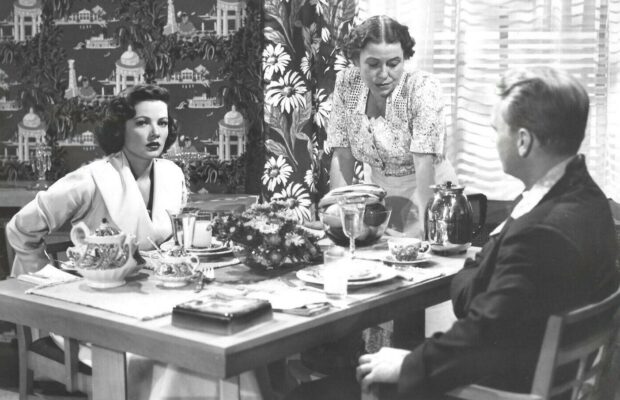
Toronto Film Society presented The Mating Season (1950) on Monday, August 25, 1986 in a double bill with The Girl Most Likely as part of the Season 39 Summer Series, Programme 7.
Production Company: Paramount Pictures. Director: Mitchell Leisen. Screenplay: Charles Brackett, Walter Reisch and Richard Breen.
Cast: Thelma Ritter (Ellen McNulty), John Lund (Van McNulty), Gene Tierney (Maggie Carleton), Miriam Hopkins (Fran Carleton), Jan Sterling (Betsy), Larry Keating (Mr. Kalinger), James Lorimer (Junior), Cora Witherspoon (Mrs. Williamson), Gladys Huribut (Mrs. Conger), Ellen Corby (Annie), Billie Bird (Mugsy), Mary Young (Spinster).
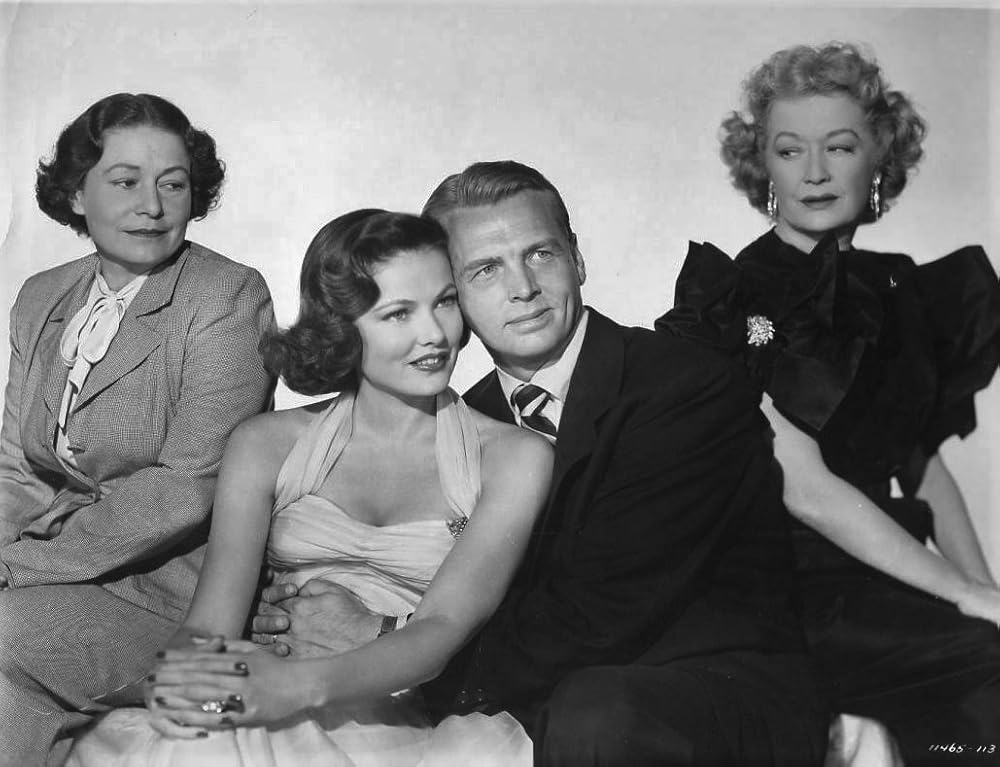
The Mating Season highlights Thelma Ritter as the unassuming but outspoken domestic that typifies this character actress of Hollywood films of the late forties. Having set a record as supporting actress by claiming no less than six academy award nominations in a span of 12 years, Ritter’s penchant for scene-stealing performances is quite evident in the film title of the evening. Ritter’s cynical, wisecracking, cracked Brooklyn voice imparts a wholesome aspect to what otherwise might have become a social burlesque of the American upper-class society. In this lightly conceived domestic comedy, Ritter creates a believable character as the plain speaking, honest but simple mother floundering amidst the flutter and flit engendered by her glamour boy son (John Lund). Aspiring to scale the social ladder of the upper crust, the son secures a marriage unusual in that a factory draughtsman weds an ambassador’s daughter. The real fun begins when Ritter loses her job as a hamburger shop proprietress. To preserve her son’s newly found status, Ritter works incognito as the droll housemaid servant in the home of the newlyweds.
The absurd appearance of the clumsy manners of Ritter counterpointed by the frank and to the point snappy dialogue presents the classical ideal of the diamond-in-the-rough surrounded by artificial glamour and farce in a make-believe world. Except for the solid substance of the working-class person in the figure of Ritter, the film dissolves into a shadowy world of elegance and featherweight roles that travesties the dullness of young people and the stock characters of old people. Indeed, the primary value of the film is the comedienne whose gentle humour and integrity rise above the insignificance of the flighty and familiar plot.
As Bosley Crowther writing for Variety in 1951 would say, “Blame it on Leisen”. The incongruity between slapstick farce and the genuine warmth of character of Ritter makes this film a pastiche of routine situation comedies that aspires to be a silk purse. In the later Paramount studio style featuring the upper classes, The Mating Season is true to form with a characteristic glitter classified as light family entertainment that emerged in the declining years of Paramount’s epics and risqué themes that produced the slogan, “If it’s a Paramount picture, it’s the best picture in town”. What does not work in this film is that Ritter is not amongst equally believable or significant characters but is left to improvise a star performance.
Writer Charles Brackett rejoins Mitchell Leisen in The Mating Season, one of the of the finest writing talents responsible for the witty and probing scripts produced for one of Hollywood’s most civilized directors during the thirties and forties. Working in the studio style established by Ernst Lubitsch, the Leisen tradition is notable for its chic, camp, witty dissolute sexual comedies, opulent sets and stories of dynamic women in pursuit of men and power who find themselves diminished in the end. Ritter belongs to this same tradition where women are strong and men are weak and is virtually the whole show as is frequently true of women in Leisen’s films. Never allowing his own personality to intrude in the film, Leisen succeeds in drawing the best out of Ritter while failing to extract starring performances from the newlyweds John Lund and Gene Tierney. In light of a reputation for one of the most varied oeuvres of any American film director, Leisen’s The Mating Season is significant only in that it appears in the decline of Leisen’s career when public taste found Leisen’s visual elegance and couturière films out of fashion.
Notes by Donna Hall
You may also like...
-

Support Classic Cinema: Toronto Film Society Sponsorship Opportunities
Toronto Film Society Corporate Sponsorship 2026/27 About TFS Founded in 1948, the Toronto Film Society is one of Canada’s oldest film appreciation groups. It was originally formed to meet...
Virtual Saturday Night at the Movies
Toronto Film Society will be screening Alfred Hitchcock’s Lady Windermere’s Fan (1925) straight to your home on Tuesday, September 29, 2026 at 7:15 p.m. (ET)! Directed by Ernst Lubitsch,...


